Uninsured Motorist Coverage — Wisconsin

Uninsured motorist coverage pays your medical bills and vehicle damage when you're hit by a driver with no insurance or a hit-and-run driver who flees the scene. Wisconsin doesn't require it, but if you're reinstating a suspended license after a lapse in coverage, this gap is exactly why you lost your license—and why carriers may require you to carry higher limits than the state minimum to get a policy at all.

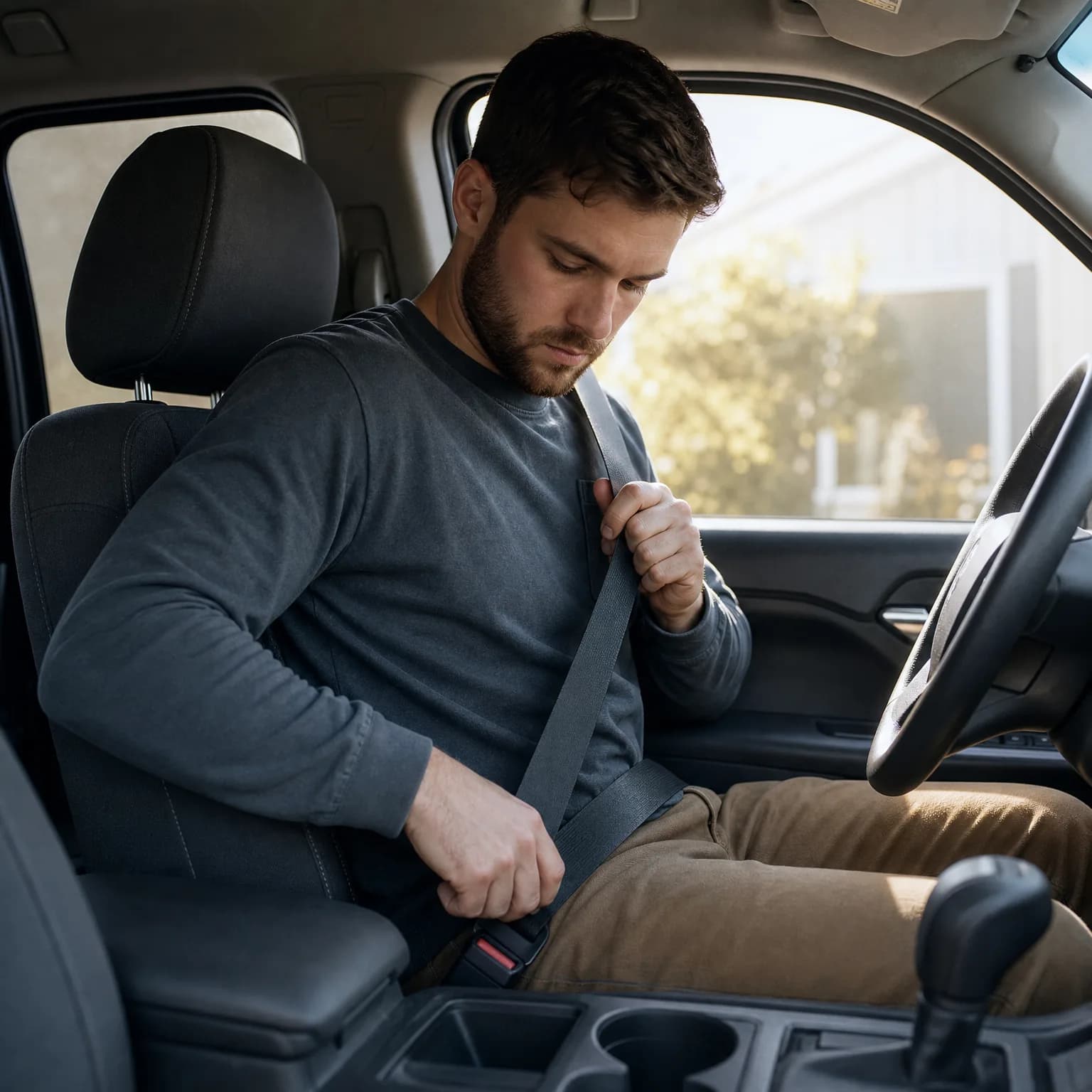
Uninsured Motorist — insurance-related stock photo

Updated June 2026

What Is Uninsured Motorist Coverage Insurance?

Uninsured motorist coverage (UM) pays for your injuries and property damage when the at-fault driver has no insurance, carries limits below your damages, or flees the scene. In Wisconsin, roughly 11% of drivers operate without insurance—meaning one in nine accidents involves a driver who cannot pay for the damage they cause. UM coverage fills that gap by stepping in as if the other driver had insurance, up to the limits you select. It covers your medical bills, lost wages, pain and suffering, and in some cases vehicle repair costs, depending on whether you carry UM property damage as part of the endorsement.

  • You're rear-ended on Highway 41 in Brown County by a driver who flees the scene. You sustain $14,000 in medical bills and $6,500 in vehicle damage. The police file a hit-and-run report but never locate the driver. Your UM bodily injury coverage pays the $14,000 in medical costs up to your selected limit. If you carry UM property damage, it covers the $6,500 vehicle repair after your deductible. Without UM, you pay both out of pocket or file through your own collision coverage, which still leaves the medical bills uncompensated.
  • An uninsured driver runs a red light and T-bones your car in Milwaukee, causing $22,000 in medical bills and totaling your vehicle. You carry $50,000/$100,000 UM bodily injury and $25,000 UM property damage. Your UM bodily injury pays the full $22,000 in medical costs. UM property damage covers your totaled vehicle up to $25,000 minus your deductible. The at-fault driver has no assets and no insurance, so your UM coverage is the only source of payment. Without it, you're left suing a judgment-proof defendant while your medical bills go to collections.
  • You're involved in a chain-reaction crash on I-94 near Madison. The driver who caused the pileup has a minimum liability policy of $25,000/$50,000, but your injuries total $60,000. Their liability coverage pays out its $25,000 per-person limit, leaving a $35,000 gap. If you carry underinsured motorist coverage—typically sold alongside UM—it covers the remaining $35,000 up to your selected limit. UM alone does not cover this scenario because the at-fault driver is insured, just underinsured. Many Wisconsin drivers assume UM covers both gaps; it does not unless you specifically add underinsured motorist (UIM) to the policy.

Who Needs Uninsured Motorist Coverage Insurance?

If you're reinstating a Wisconsin license after suspension for driving uninsured or lapsed coverage, UM coverage addresses the exact scenario that caused your suspension—getting hit by another uninsured driver. Carriers know suspended drivers are higher risk and often require UM limits at or above your liability limits as a condition of issuing a policy, even though Wisconsin law does not mandate it. If you drive in Milwaukee, Racine, or other counties with uninsured driver rates above 12%, UM is the only protection against another driver leaving you with uncovered medical bills and a totaled car.
Check your health insurance out-of-pocket maximum and compare it to a $50,000 UM bodily injury limit. If your health plan leaves you with $10,000+ in potential medical costs after deductibles and copays, UM fills that gap for $10–$15 per month. If you're financing a vehicle, your lender likely requires collision coverage, which makes UM property damage redundant—skip it and keep UM bodily injury only. Ask your carrier whether they require UM as a condition of writing your policy during reinstatement; if yes, you're buying it regardless, so select limits that match your liability coverage to avoid gaps in a serious accident.

How Much Does Uninsured Motorist Coverage Insurance Cost?

Adding UM bodily injury coverage to a Wisconsin liability policy costs approximately $8–$18 per month, or $96–$216 annually, for $50,000/$100,000 limits. UM property damage adds another $3–$8 per month.
  • Your selected UM limits—higher limits such as $100,000/$300,000 increase the premium, while matching state liability minimums of $25,000/$50,000 keeps costs lower.
  • Whether you add UM property damage alongside UM bodily injury—bundling both endorsements raises the monthly cost but eliminates out-of-pocket vehicle damage exposure in hit-and-run scenarios.
  • Your ZIP code and county uninsured motorist rate—Milwaukee County has a higher uninsured driver rate than Dane County, so UM premiums reflect the increased collision risk.
  • Your driving record and reinstatement status—drivers reinstating after a suspension for lapsed insurance or DUI pay higher base premiums, and carriers often require higher UM limits as a condition of issuing a policy.
  • Stacking options—Wisconsin allows UM limits to stack across multiple vehicles on the same policy, which increases premium but multiplies available coverage in a serious accident.
  • Carrier underwriting rules—some Wisconsin carriers include UM automatically at liability limits and require you to reject it in writing, while others treat it as optional and price it separately.

Related Coverage Types

Get Your Free Uninsured Motorist Coverage Quote