
Same-Day SR-22 Filing After an OWI — Wisconsin
Free to compare
The Court Order Comes First
You received an OWI conviction in Wisconsin and need to get back on the road for work. You know SR-22 filing is required. You contact a carrier expecting same-day filing — and they tell you they cannot file until you provide a court order for an occupational license. This is the procedural reality most Wisconsin OWI drivers hit immediately: SR-22 filing is mandatory, but it cannot happen until after the court grants your occupational license petition.
Wisconsin uses a two-step restoration sequence. Step one is a circuit court petition for an occupational license under Wis. Stat. § 343.10. Step two is taking that court order to the Wisconsin DMV to receive the physical license document. SR-22 filing happens between those two steps — after court approval, before DMV issuance. Carriers file the SR-22 once you show them the signed court order. Same-day filing is possible, but only once you clear the court approval hurdle.
“Wisconsin carriers won't file SR-22 until you show the signed court order — filing before court approval wastes your money.”

Get Your Wisconsin SR-22 Filed Without the Markup
Get My Wisconsin SR-22 Auto Insurance Quote30 days
Wisconsin First-OWI Hard Suspension
Wisconsin imposes a mandatory 30-day hard suspension before occupational license eligibility for first OWI offenses, per Wis. Stat. § 343.10(5)(b). Second or subsequent OWI within 10 years triggers a 90-day hard suspension before you can apply.
Wis. Stat. § 343.10(5)(b)
Why Carriers Wait for the Court Order
SR-22 is a certificate of financial responsibility proving you carry liability insurance meeting Wisconsin's minimums: $25,000 bodily injury per person, $50,000 per accident, and $10,000 property damage. Carriers electronically file the SR-22 with the Wisconsin DMV on your behalf. The filing itself takes minutes once the carrier processes your application.
The blocker is not carrier processing time. The blocker is that Wisconsin statute requires an occupational license court order before the DMV will accept SR-22 filing for restoration purposes. Carriers know this procedural sequence. They will not file SR-22 until you provide a copy of your signed court order because filing before court approval wastes your money — the DMV does not apply it to your reinstatement until the court order exists.
This procedural quirk exists because Wisconsin's occupational license is court-defined, not DMV-defined. The court sets your driving hours, purposes, and routes. The DMV issues the physical license document only after receiving proof that the court authorized it and that you carry SR-22-backed insurance. The SR-22 filing is the proof-of-insurance bridge between court approval and DMV issuance.
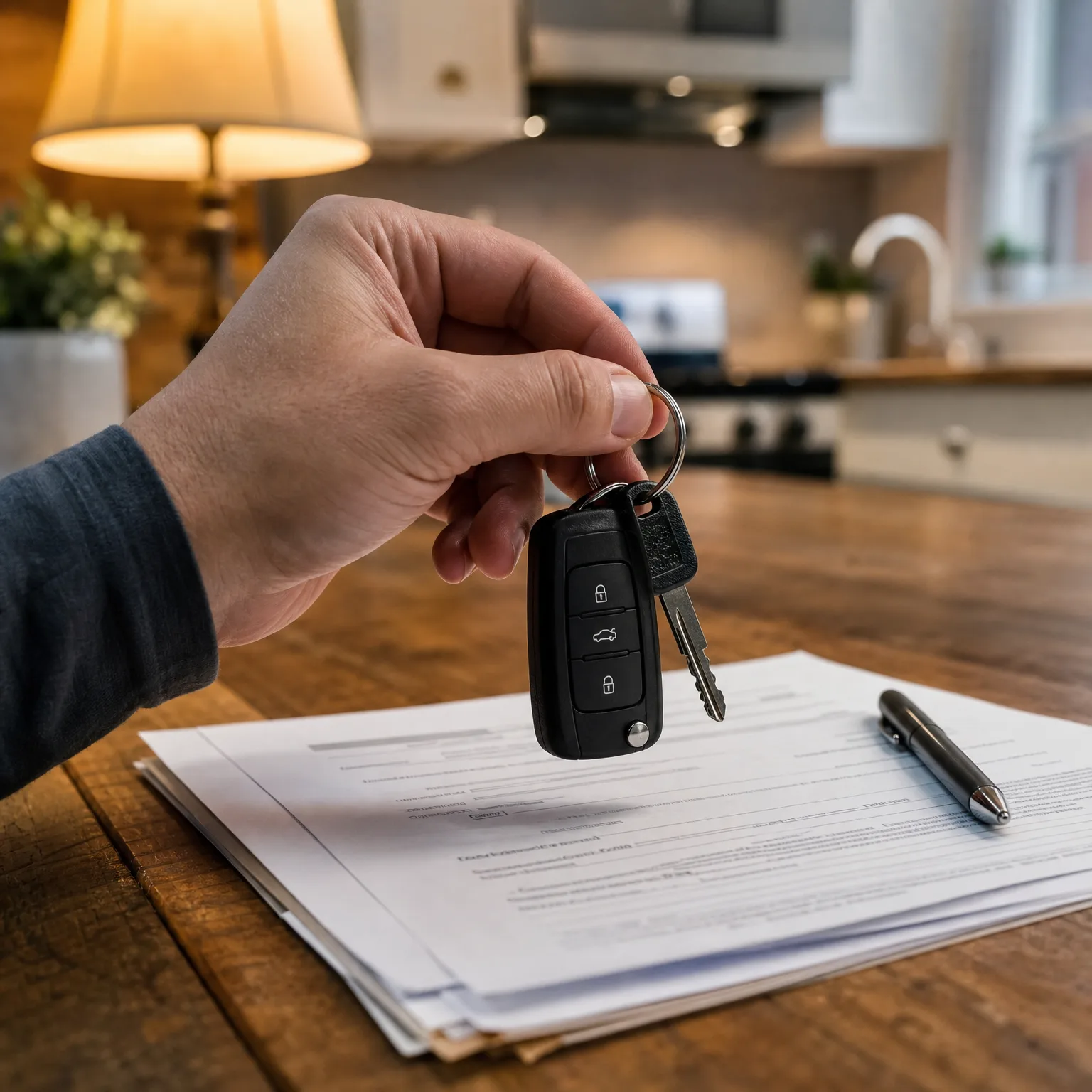
Wisconsin carriers cannot file SR-22 until you show them the signed occupational license court order — filing before court approval results in rejection by the DMV.






Ignition Interlock Device Requirement
Wisconsin mandates ignition interlock device (IID) installation for most OWI-related occupational licenses, including first offenses in many circumstances, under Wis. Stat. § 343.301. The IID period varies by offense count. Your court order will specify whether IID installation is required before the DMV issues your occupational license.
If IID is required, you must install the device at a state-approved vendor before taking your court order and SR-22 proof to the DMV. The vendor provides an installation certificate. You bring the court order, SR-22 filing confirmation from your carrier, IID installation certificate, and the $60 reinstatement fee to the Wisconsin DMV. The DMV issues your occupational license once all documents are verified. The entire process from court approval to DMV issuance typically takes 1-3 business days if you have all documents ready.
If you violate the IID requirement or occupational license restrictions — driving outside allowed hours, purposes, or routes — Wisconsin revokes the occupational license immediately. Reinstatement after revocation requires a new court petition and a new SR-22 filing. Absolute sobriety (0.00 BAC) applies during the entire occupational license period and any subsequent probationary period.
$60
Wisconsin OWI Reinstatement Fee
Wisconsin assesses a $60 base reinstatement fee per suspension action. If you have multiple concurrent suspensions or revocations, Wisconsin charges $60 per underlying action, which can result in total fees above $60.
Wisconsin DOT fee schedule

SR-22 Carrier Options in Wisconsin
Wisconsin SR-22 filings are available from most major carriers and several non-standard insurers. Progressive, Geico, State Farm, Dairyland, Bristol West, The General, National General, and GAINSCO all write SR-22-backed policies in Wisconsin. Monthly premiums for minimum-liability SR-22 policies after an OWI typically range from $110 to $180 per month, depending on your age, county, and prior insurance history.
Non-owner SR-22 policies are available if you do not currently own a vehicle but need SR-22 filing to satisfy court requirements. Non-owner policies provide liability coverage when you drive borrowed or rented vehicles. Monthly premiums for non-owner SR-22 policies in Wisconsin typically range from $45 to $85 per month. Dairyland, Progressive, Geico, USAA, The General, Bristol West, and GAINSCO all offer non-owner SR-22 in Wisconsin. Estimates based on available industry data; individual rates vary by driving history, age, and location.
Same-Day Filing Once Court Approves
Once you have your signed court order, same-day SR-22 filing is operationally possible with most Wisconsin carriers. You contact the carrier, purchase the liability policy, provide a copy of the court order, and the carrier files SR-22 electronically with the Wisconsin DMV. Electronic filing typically processes within 24 hours. Some carriers (Progressive, Geico, Dairyland) confirm SR-22 filing the same business day if you apply before 3 PM Central Time.
The DMV receives the SR-22 filing electronically and updates your record. You do not receive a physical SR-22 certificate in most cases — the carrier's electronic filing is the official proof. If you need documentation for the DMV visit, request a filing confirmation letter from your carrier showing your policy number, effective date, and SR-22 filing status. Bring this letter, your court order, IID installation certificate (if required), and the $60 reinstatement fee to the Wisconsin DMV to receive your occupational license.

Get SR-22 Coverage After Court Approval
Wisconsin's two-step occupational license process requires court approval first, SR-22 filing second, and DMV issuance third. Once your court order is signed, SR-22 filing happens within 24 hours with most carriers. Compare Wisconsin SR-22 carriers that file same-day to find the lowest premium for your county and driving history. Start your comparison now to see which carriers serve your area and what monthly premiums look like for your situation.
Court Petition and SR-22 Documentation Sequence
Your petition must include proof of employment or essential need (work, school, medical appointments, church, or alcohol/drug treatment programs), a completed application form, payment of court fees, and proof that you can obtain SR-22 insurance once the order is granted. Most courts require a letter from your employer on company letterhead stating your work schedule and confirming that driving is essential to your job. School enrollment letters, medical appointment documentation, or treatment program schedules serve the same purpose for non-work essential needs.
Once the court grants your petition, you receive a signed court order specifying your allowed driving hours, purposes, and routes. Wisconsin courts have full discretion to define these restrictions under Wis. Stat. § 343.10. Maximum allowable driving is 12 hours per day and 60 hours per week. Typical court orders limit driving to specific hours (e.g., 6 AM to 6 PM) and specific routes between home, work, school, and treatment locations. You take this signed order to an SR-22 carrier, purchase a liability policy meeting Wisconsin minimums, and the carrier files SR-22 electronically with the DMV within 24 hours.
Get Your Free Quote
Get My Wisconsin SR-22 Auto Insurance QuoteFrequently Asked Questions
Can I get SR-22 insurance before my Wisconsin occupational license court hearing?
You can purchase a liability policy before the hearing, but carriers will not file SR-22 with the Wisconsin DMV until you provide a signed court order. SR-22 filing before court approval is rejected by the DMV because Wisconsin requires the court order to exist before applying SR-22 to your reinstatement. Wait until your petition is granted, then request SR-22 filing from your carrier.
How long does Wisconsin require SR-22 filing after an OWI?
Wisconsin typically requires SR-22 filing for 3 years following OWI-related reinstatements, measured from the date your driving privilege is restored. If your SR-22 coverage lapses at any point during the 3-year period, the clock resets and you must file SR-22 for another full 3 years from the date coverage is reinstated.
What happens if I drive outside the hours allowed on my Wisconsin occupational license?
Driving outside your court-defined hours, purposes, or routes results in immediate revocation of your occupational license. Wisconsin treats this as operating after revocation, which is a criminal offense. Reinstatement after revocation requires filing a new court petition, obtaining a new SR-22 filing, and paying another $60 reinstatement fee.
Do I need an ignition interlock device for a first OWI in Wisconsin?
Wisconsin mandates ignition interlock device (IID) installation for most OWI-related occupational licenses, including first offenses in many circumstances, under Wis. Stat. § 343.301. Your specific court order will state whether IID is required. If required, you must install the IID at a state-approved vendor and provide an installation certificate to the DMV before your occupational license is issued.
Can I get a non-owner SR-22 policy in Wisconsin if I don't own a car?
Yes. Non-owner SR-22 policies provide liability coverage when you drive borrowed or rented vehicles and satisfy Wisconsin's SR-22 filing requirement. Dairyland, Progressive, Geico, USAA, The General, Bristol West, and GAINSCO all offer non-owner SR-22 in Wisconsin. Monthly premiums typically range from $45 to $85 per month.
How much does SR-22 insurance cost in Wisconsin after an OWI?
Monthly premiums for minimum-liability SR-22 policies in Wisconsin after an OWI typically range from $110 to $180 per month, depending on your age, county, and prior insurance history. Non-owner SR-22 policies cost less, typically $45 to $85 per month. Individual rates vary by driving history, vehicle, coverage selections, and location.