
Full Coverage SR-22 Insurance Cost — Wisconsin
Free to compare
Why Full Coverage Isn't Required — But You Might Still Need It
Wisconsin's SR-22 requirement mandates proof of liability insurance at the state minimum: $25,000 bodily injury per person, $50,000 per accident, $10,000 property damage. The state does not require collision or comprehensive coverage to satisfy SR-22 filing. If you own your vehicle outright and no court order specifies otherwise, liability-only coverage meets your legal obligation.
The confusion arises when a lender, lessor, or court order layers additional requirements on top of the state minimum. If you're financing or leasing a vehicle, your lender contract requires collision and comprehensive coverage regardless of SR-22 status. If a judge imposed full coverage as a probation condition — common in repeat OWI cases — you must carry it even if the DMV doesn't require it. The SR-22 filing itself is format-neutral; it certifies whatever policy you carry meets the stated minimums, whether liability-only or full coverage.
“Wisconsin requires liability-only for SR-22 — but your lender or court can require full coverage on top of that, creating a two-tier cost structure most drivers miss.”

Get Your Wisconsin SR-22 Filed Without the Markup
Get My Wisconsin SR-22 Auto Insurance Quote$25,000 / $50,000 / $10,000
Wisconsin SR-22 Liability Minimum
Wisconsin Statute § 344.01 defines minimum financial responsibility as $25,000 bodily injury per person, $50,000 per accident, $10,000 property damage. SR-22 filing certifies your policy meets or exceeds these floors.
Wis. Stat. § 344.01
What Full Coverage Actually Costs After SR-22 Filing
Liability-only SR-22 policies in Wisconsin typically cost $140–$220 per month for drivers with a single OWI or suspension trigger. Full coverage — liability plus collision and comprehensive with $500 or $1,000 deductibles — typically runs $280–$450 per month for the same driver profile. The gap reflects the vehicle replacement risk carriers assume when covering physical damage to a car driven by someone flagged as high-risk.
Your actual premium depends on violation severity, age, county, vehicle value, and how long ago the triggering event occurred. A second OWI within ten years pushes premiums toward the high end of the range or higher. Drivers over 55 with a first-time violation trend toward the lower end. Milwaukee County rates run 15–25 percent higher than rural counties due to theft and collision claim frequency.
Carriers writing SR-22 policies in Wisconsin include State Farm, Geico, Progressive, The General, Dairyland, Bristol West, GAINSCO, and National General. State Farm and Geico offer SR-22 filing but reserve their best rates for drivers with minimal recent violations. Non-standard carriers like The General and Dairyland specialize in high-risk drivers and often quote lower premiums for drivers with OWI convictions or multiple suspensions.
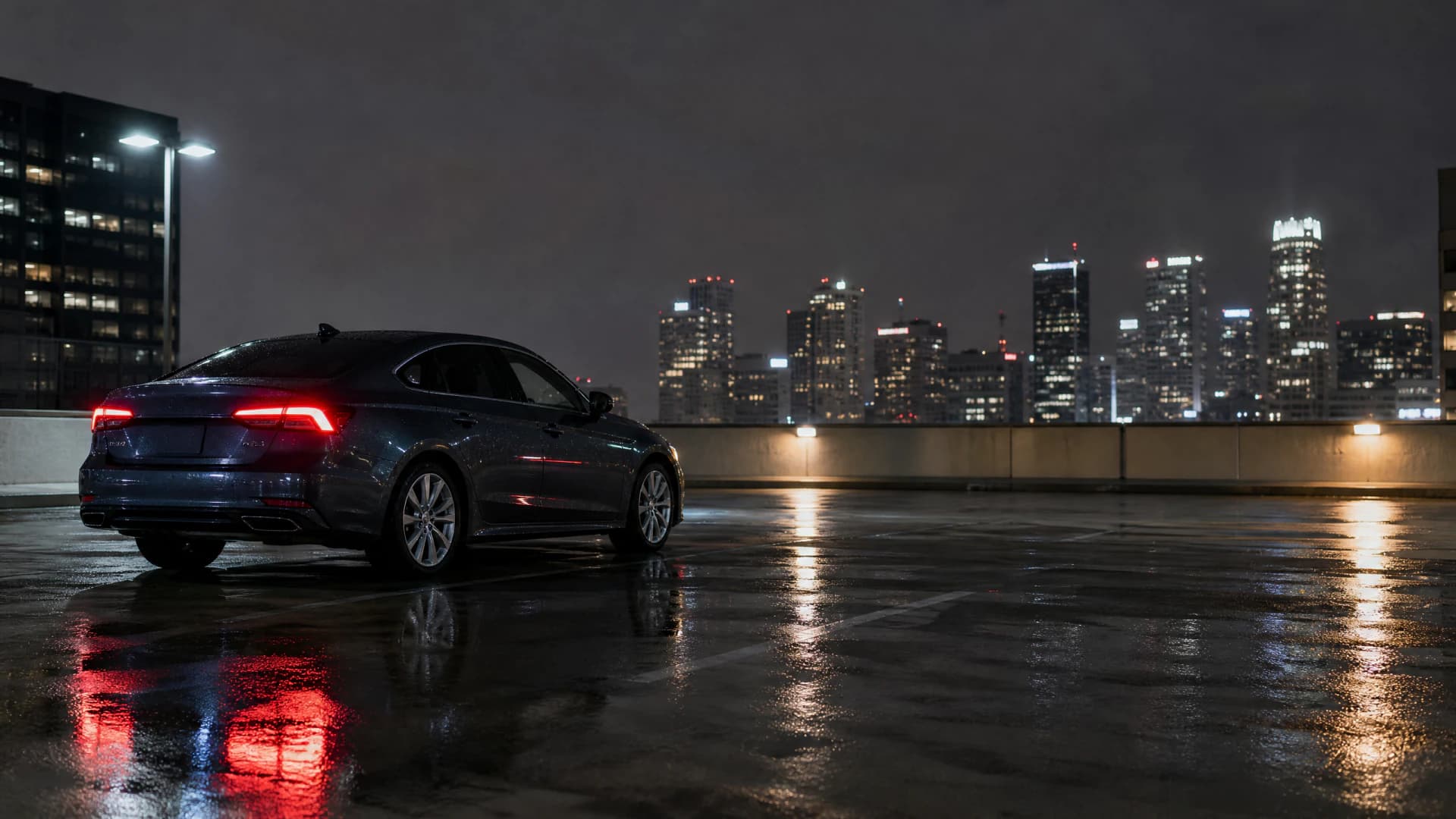
The blocker: your lender requires full coverage but your reinstatement budget only covers liability. The state will accept liability-only SR-22 — your lender won't.





Court-Ordered Full Coverage and Probation Conditions
Wisconsin circuit courts have discretion under Wis. Stat. § 343.10 to impose insurance conditions beyond the state minimum when granting occupational licenses or setting probation terms for OWI convictions. Judges in Dane, Milwaukee, and Waukesha counties frequently order full coverage as a probation condition for second or subsequent OWI offenses, reasoning that collision and comprehensive coverage protects third parties and the public from uninsured loss when a high-risk driver causes an accident.
If your court order specifies full coverage, dropping to liability-only violates probation even if the DMV would accept liability-only SR-22 filing. Probation violations can trigger immediate occupational license revocation, extended supervision periods, or jail time for underlying suspended sentences. Read your probation order carefully — it supersedes the statutory minimum. If full coverage is unaffordable, petition the court for modification rather than dropping coverage and hoping the probation officer doesn't notice.
$280–$450/month
Wisconsin Full Coverage SR-22 Premium
Full coverage policies for SR-22 filers in Wisconsin — liability plus collision and comprehensive with $500 deductible — typically cost $280–$450 per month depending on county, violation count, age, and vehicle value. Rates are highest in Milwaukee County and lowest in rural northern counties.

Reducing Full Coverage Premiums Without Dropping Requirements
If you're locked into full coverage by lender or court requirement, three adjustments reduce premiums without violating the mandate. First, raise your collision and comprehensive deductibles to the maximum your lender or court allows — typically $1,000. Moving from a $500 to $1,000 deductible saves $40–$70 per month on average. Second, request usage-based insurance programs from carriers that offer them. Progressive's Snapshot and State Farm's Drive Safe & Save track mileage and driving behavior; low-mileage drivers who avoid hard braking and late-night trips see premium reductions of 10–20 percent after the monitoring period.
Third, compare non-standard carrier quotes against standard carriers. Geico and State Farm file SR-22 certificates but price full coverage as if you're a standard risk with a recent blemish. The General, Dairyland, and Bristol West specialize in high-risk SR-22 drivers and build their actuarial models around violation history — they often quote $60–$100 per month lower for the same coverage limits and deductibles. Non-standard carriers accept higher claim risk in exchange for higher baseline premiums across their book, which paradoxically makes them cheaper for drivers already flagged as high-risk.
Compare Carriers That Specialize in Wisconsin SR-22 Filing
Wisconsin SR-22 filers have access to a mix of standard and non-standard carriers. State Farm, Geico, Progressive, and USAA write SR-22 policies but reserve competitive rates for first-time offenders with otherwise clean records. The General, Dairyland, Bristol West, GAINSCO, and National General specialize in high-risk drivers and often deliver lower premiums for drivers with multiple violations, suspended licenses, or OWI convictions within the past three years.
Request quotes from at least three carriers in each tier. Non-standard carriers vary widely in pricing methodology — The General may quote $180/month liability-only while Dairyland quotes $240 for an identical driver profile in the same ZIP code. Shopping multiple non-standard carriers consistently produces savings of 20–35 percent compared to quoting a single carrier. Use Wisconsin's SR-22 carrier comparison tool to request quotes from carriers licensed in your county and compare monthly premiums, filing fees, and policy term options side by side.
How to Decide Between Liability-Only and Full Coverage
Start with your reinstatement paperwork. If your suspension letter or court order specifies liability limits only, and you own your vehicle outright with no lien, liability-only coverage satisfies your legal obligation. The Wisconsin DOT Division of Motor Vehicles requires only that your SR-22 certificate prove continuous coverage at the statutory minimum — collision and comprehensive are not part of that minimum. Request quotes for liability-only policies first.
If you're financing or leasing, pull your loan or lease agreement and check the insurance requirements clause. Nearly every auto loan contract in Wisconsin requires collision and comprehensive with maximum deductibles of $500 or $1,000. Your lender can — and will — force-place coverage at a much higher cost if you drop below their required limits. If your vehicle is worth less than $5,000 and you can afford to replace it out-of-pocket, some drivers buy out the loan or negotiate lender release, then drop to liability-only. If that's not an option, budget for full coverage and request higher deductibles to lower the premium.
Get Your Free Quote
Get My Wisconsin SR-22 Auto Insurance QuoteFrequently Asked Questions
Does Wisconsin require full coverage for SR-22 filing?
No. Wisconsin requires proof of liability insurance at the state minimum ($25,000/$50,000/$10,000) to satisfy SR-22 filing. Full coverage — collision and comprehensive — is not required by the state unless a lender, lessor, or court order specifically mandates it.
How much does SR-22 insurance cost in Wisconsin with full coverage?
Full coverage SR-22 policies in Wisconsin typically cost $280–$450 per month, compared to $140–$220 per month for liability-only. Premiums vary by county, violation type, age, and vehicle value. Milwaukee County rates run highest; rural northern counties run lowest.
Can I drop full coverage and switch to liability-only if I have SR-22?
Only if you own your vehicle outright, have no lien, and no court order requires full coverage. If you're financing, leasing, or under probation conditions mandating collision and comprehensive, dropping to liability-only violates your contract or probation terms even though the state accepts liability-only SR-22.
Which carriers in Wisconsin offer the cheapest SR-22 full coverage?
Non-standard carriers like The General, Dairyland, Bristol West, and GAINSCO specialize in high-risk SR-22 drivers and often quote $60–$100 per month lower than standard carriers for full coverage. State Farm and Geico file SR-22 but reserve their best rates for first-time offenders with minimal violations.
What happens if I drop full coverage while on SR-22 probation in Wisconsin?
If your court order requires full coverage as a probation condition, dropping to liability-only violates probation. Consequences include immediate occupational license revocation, extended supervision, or jail time for underlying suspended sentences. Petition the court for modification if full coverage is unaffordable.