
Cheapest SR-22 Monthly Payments After an Accident — Wisconsin
Free to compare
You Need SR-22 Coverage That Fits a Monthly Budget
You caused an accident in Wisconsin without insurance, or you were convicted of leaving the scene, and now DMV sent you a suspension notice requiring SR-22 proof of financial responsibility. You have 30 days to file or the suspension takes full effect. You need coverage you can pay monthly, but every carrier you've called either won't write you or quoted a number that blows past what you can afford.
The SR-22 filing itself is cheap — Wisconsin carriers charge $25 to $35 one time to submit the certificate to WisDOT. The monthly premium is the problem. You're now classified non-standard, which means standard-tier carriers like State Farm and Allstate either won't quote you at all or will price you into a different market. The carriers that will write you — Bristol West, The General, GAINSCO, Dairyland — tier their monthly rates by violation type, and accident-triggered SR-22 filings without alcohol involvement price lower than DUI-triggered filings in the same geographic rating territory.
“Accident-only SR-22 filings without alcohol involvement price materially lower at carriers that tier by violation type.”

Get Your Wisconsin SR-22 Filed Without the Markup
Get My Wisconsin SR-22 Auto Insurance Quote$60
Wisconsin License Reinstatement Fee
Wisconsin charges a $60 base reinstatement fee to restore your operating privilege after the suspension period ends. If you have multiple concurrent suspensions, WisDOT assesses a separate $60 fee for each underlying action, which can stack to totals well above $60.
Wisconsin Department of Transportation reinstatement fee schedule
Accident-Only SR-22 Prices Lower Than DUI SR-22 in Wisconsin
Wisconsin non-standard carriers separate accident-caused suspensions from alcohol-involved suspensions when they set monthly premium. An at-fault accident with no DUI, no refusal, and no license already suspended prices into a lower tier than a first OWI. The filing requirement is identical — WisDOT mandates SR-22 for 3 years from reinstatement date regardless of trigger — but the carrier's underwriting model treats accident-only risk differently than impaired-driving risk.
Bristol West writes accident-triggered SR-22 policies in Wisconsin and tiers monthly premium by violation severity. The General does the same. GAINSCO launched Wisconsin in 2021 and explicitly prices accident SR-22 below DUI SR-22. If you're calling carriers and leading with 'I need SR-22 after an accident,' you're in a better underwriting position than someone calling with 'I need SR-22 after a DUI' — but only if you're calling carriers that tier by violation type. State Farm writes SR-22 in Wisconsin but does not specialize in non-standard risk; their monthly rate for any SR-22 filing will price higher than a carrier whose core book is non-standard.
Most drivers in your position call every carrier that rejected them for DUI and assume all SR-22 filings price the same. They don't. Accident-only filings without alcohol involvement, without refusal, and without a prior suspension on record price materially lower at carriers that underwrite non-standard risk by violation tier. You need to compare carriers that separate these tiers, not carriers that lump all SR-22 filings into one bucket.
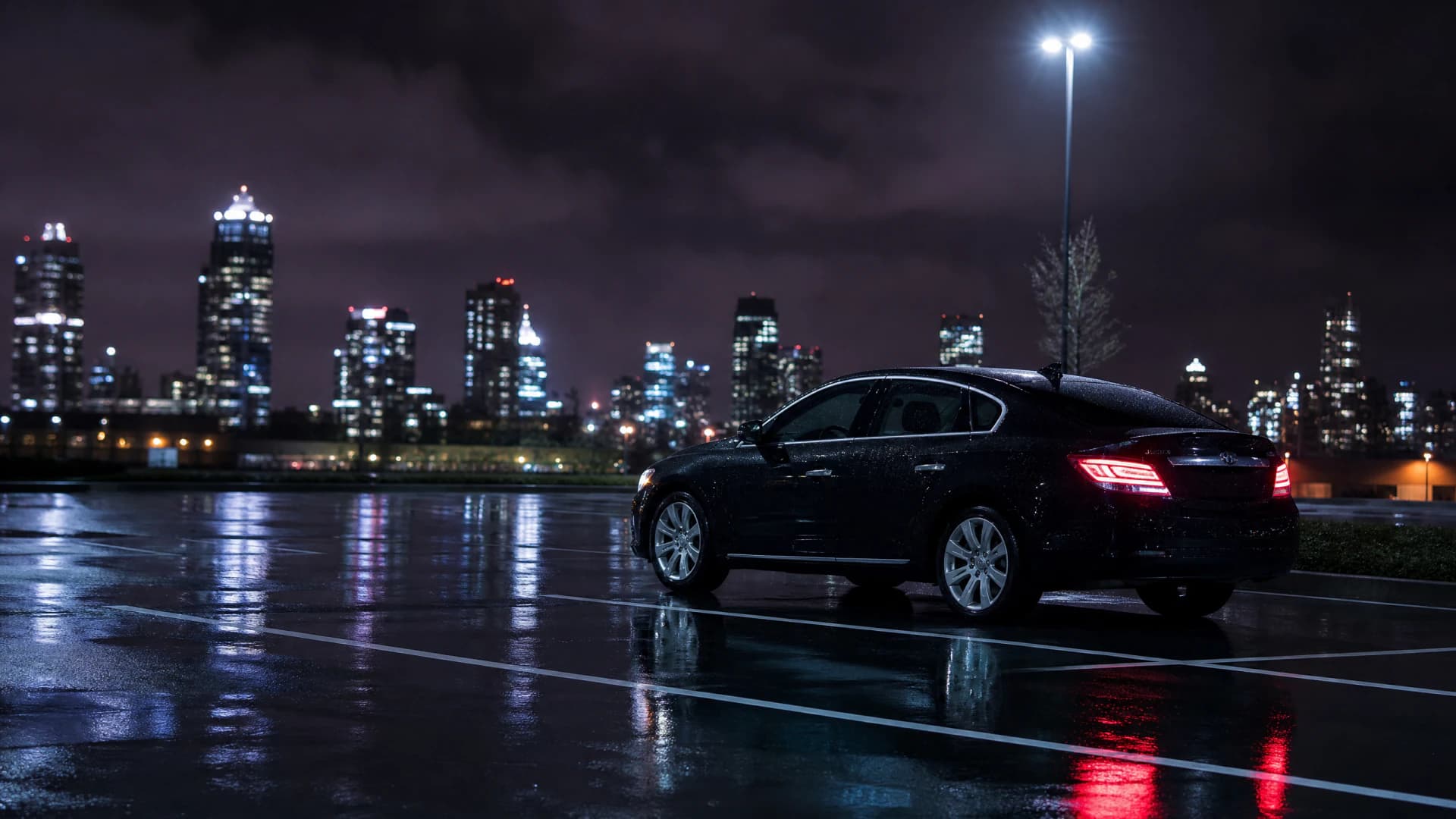
Calling only standard-tier carriers wastes your time — they either won't write you or will price you as high-risk without tiering by violation type.





Monthly Premium Depends on Your Full Violation History
The accident that triggered your SR-22 requirement is not the only variable the carrier prices. They pull your Wisconsin driving record and your CLUE report (Comprehensive Loss Underwriting Exchange, which tracks your insurance claim history). If the at-fault accident is your only violation in the past 3 years, you price lower than someone with the same accident plus two speeding tickets. If you filed a claim for the accident, that claim appears on CLUE and adds to your risk score. If you let your prior policy lapse before the accident, that lapse appears on your record and raises your monthly rate.
Wisconsin uses an electronic insurance verification system under Wis. Stat. § 344.62. When your prior carrier canceled your policy, they reported the cancellation to WisDOT electronically. That cancellation is visible to every carrier you quote with. A driver with an at-fault accident and no lapse prices lower than a driver with an at-fault accident and a 60-day lapse immediately before the accident. Carriers interpret the lapse as evidence you were driving uninsured, which moves you into a higher-risk tier even if the accident itself did not involve an uninsured-driving citation.
Your credit-based insurance score also affects monthly premium in Wisconsin. Carriers use it as a statistical predictor of claim frequency. Wisconsin law allows insurers to use credit information in underwriting and rating, subject to disclosure requirements. If your credit score dropped after the accident — because you couldn't pay the at-fault claim out of pocket, or because you missed payments during the suspension period — your monthly rate will reflect that drop. Non-standard carriers price higher for low credit scores. You cannot change your violation history, but you can shop carriers that weight credit differently in their pricing models.
3 years
Wisconsin SR-22 Filing Period
Wisconsin requires SR-22 filing for 3 years following reinstatement after most accident-triggered and uninsured-driving suspensions. The 3-year clock starts from your reinstatement date, not your suspension date. If your SR-22 coverage lapses during the 3-year period, your carrier reports the lapse to WisDOT electronically and your license suspends again immediately.
Wis. Stat. § 344.62 electronic insurance verification requirements

Liability-Only Keeps Monthly Cost Lower Than Full Coverage
Wisconsin requires bodily injury liability of $25,000 per person / $50,000 per accident and property damage liability of $10,000. Uninsured motorist coverage is also required unless you reject it in writing. This is the minimum the carrier can write while meeting state law and your SR-22 filing obligation. Adding collision and comprehensive coverage to insure your own vehicle raises your monthly premium significantly — often doubling it — and does nothing to satisfy your SR-22 requirement. The SR-22 certificate proves you carry liability coverage, not coverage on your own car.
If your vehicle is worth less than $3,000 and you own it outright with no lien, liability-only makes financial sense. You pay the lowest possible monthly premium, you satisfy WisDOT's SR-22 requirement, and you do not insure an asset whose replacement cost is lower than one year of collision premiums. If your vehicle is financed, your lender requires collision and comprehensive regardless of SR-22 — you cannot drop them. If your vehicle is worth more than $5,000 and you cannot afford to replace it out of pocket, you face a monthly-cost decision: pay more now for full coverage, or accept the risk that a total loss leaves you without a vehicle and still paying your SR-22 premium on a liability-only policy.
Compare Three Non-Standard Carriers Before You Commit
Monthly premium for the same liability limits and the same SR-22 filing can vary by $40 to $80 per month between Wisconsin non-standard carriers. Bristol West might quote you $135/month for 25/50/10 liability plus SR-22 filing; The General might quote $110/month for identical coverage; GAINSCO might quote $145/month. The variation comes from how each carrier weights your specific violation mix, your county, your vehicle, and your credit score in their proprietary pricing model. You cannot predict which carrier will price lowest for your profile without quoting all three.
Wisconsin allows you to bind coverage and request SR-22 filing the same day. The carrier submits the SR-22 certificate to WisDOT electronically within 24 hours of binding. WisDOT processes it and updates your record within 1 to 3 business days. You do not wait weeks for a paper certificate. Once WisDOT confirms receipt, you can pay your $60 reinstatement fee and schedule your license reissue. Your monthly payment obligation starts the day you bind, not the day WisDOT processes the filing. Compare three carriers, choose the lowest monthly rate that fits your budget, bind same-day, and you're filed. Then maintain that coverage without lapse for the full 3-year period or your license suspends again and you start over.
Which Wisconsin Carriers Write Accident SR-22 on Monthly Payment Plans
Bristol West operates in Wisconsin as a non-standard specialist. They write SR-22 filings for accident-caused suspensions, tier monthly premium by violation type, and allow monthly payment plans. Their Wisconsin book includes drivers with at-fault accidents, uninsured-driving suspensions, and license lapses. You can quote online or through an independent broker. AM Best rates Bristol West's parent company A- (Excellent). The General writes Wisconsin SR-22 filings and explicitly markets to drivers who cannot get standard-tier coverage. They tier accident-only lower than DUI. Monthly payment plans are standard. The General is owned by Sentry Insurance (AM Best A rating). You can quote directly on their site.
GAINSCO launched Wisconsin in 2021 as their 17th state. They write SR-22 and non-owner SR-22, tier by violation type, and offer monthly payment. GAINSCO holds an AM Best A- rating and operates as a non-standard specialist. Dairyland writes non-standard auto in 38 states including Wisconsin. They write SR-22, non-owner SR-22, and post-accident filings. Dairyland tiers by violation and allows monthly payment. Their Wisconsin operation has been active for decades. All four carriers file electronically with WisDOT — you do not handle the SR-22 certificate yourself.
Get Your Free Quote
Get My Wisconsin SR-22 Auto Insurance QuoteFrequently Asked Questions
How much does SR-22 filing cost in Wisconsin after an accident?
The SR-22 filing itself costs $25 to $35 as a one-time fee charged by your insurance carrier. This fee covers the carrier's cost to submit the certificate electronically to WisDOT. Your monthly insurance premium is separate and depends on your violation history, credit score, and the carrier's tier pricing for accident-triggered SR-22 filings.
Can I get monthly payments for SR-22 insurance in Wisconsin?
Yes. Bristol West, The General, GAINSCO, and Dairyland all offer monthly payment plans for SR-22 policies in Wisconsin. You do not need to pay the full annual premium upfront. Monthly payment plans typically add a small installment fee, but they allow you to spread the cost across 12 months instead of paying everything at binding.
Does an accident-triggered SR-22 cost less than a DUI SR-22 in Wisconsin?
Yes, at carriers that tier by violation type. An at-fault accident without alcohol involvement, without refusal, and without a prior suspension prices into a lower monthly tier than a first OWI at Bristol West, The General, and GAINSCO. State Farm writes SR-22 but does not tier by violation type, so their rate will be higher regardless of trigger.
How long do I need to keep SR-22 insurance in Wisconsin?
Wisconsin requires SR-22 filing for 3 years from your reinstatement date. The 3-year period starts when WisDOT reinstates your license, not when you bind coverage. If your coverage lapses at any point during the 3 years, your carrier reports the lapse to WisDOT electronically and your license suspends again immediately.
What happens if I let my SR-22 insurance lapse in Wisconsin?
Your carrier reports the lapse to WisDOT electronically under Wis. Stat. § 344.62. WisDOT suspends your license immediately — no grace period, no warning letter. You must purchase new SR-22 coverage, file a new certificate, pay a new $60 reinstatement fee, and restart the 3-year filing period from the new reinstatement date.
Can I use liability-only coverage to meet my Wisconsin SR-22 requirement?
Yes. Wisconsin SR-22 filing only requires proof that you carry the state's minimum liability limits: $25,000 bodily injury per person, $50,000 per accident, $10,000 property damage, and uninsured motorist coverage. You do not need collision or comprehensive coverage to satisfy the SR-22 requirement unless your lender requires it because your vehicle is financed.