
Cheapest SR-22 Insurance to Reinstate License — Wisconsin
Free to compare
You Need SR-22 Filing Plus Reinstatement Fee
You received the WisDOT notice. Your license is suspended. The letter says you owe a $60 reinstatement fee, but it doesn't explain whether you need insurance while suspended—or what SR-22 filing actually costs. If your suspension stems from OWI, driving uninsured, or refusing a chemical test, Wisconsin requires continuous SR-22 proof of financial responsibility for 3 years starting the day you reinstate. That SR-22 filing adds $15–$25 upfront to your carrier's processing cost, then raises your monthly premium 40–60% above what a clean-record driver pays.
The cheapest path to reinstatement combines Wisconsin's mandatory $60 DMV fee with a non-standard auto policy that meets state minimum liability limits ($25,000 bodily injury per person / $50,000 per accident / $10,000 property damage) and includes SR-22 electronic filing to WisDOT. You are shopping for the minimum compliant product that satisfies the legal requirement—not comprehensive coverage, not collision, not extras that pad the monthly bill. This article walks the carrier comparison, the filing mechanics, and the traps that turn a $60 reinstatement into a $300+ surprise.
“Wisconsin stacks $60 fees for each suspension cause—two concurrent violations cost $120 to reinstate, not $60.”

Get Your Wisconsin SR-22 Filed Without the Markup
Get My Wisconsin SR-22 Auto Insurance Quote$60 per cause
Wisconsin Reinstatement Fee
Wisconsin assesses a separate $60 fee for each underlying suspension action under Wis. Stat. § 343.10. If you have concurrent suspensions—OWI plus driving uninsured, for example—you pay $120, not $60. The stacked-fee structure catches drivers off guard because the notice lists only one amount.
Wis. Stat. § 343.10
SR-22 Is Required for OWI, Uninsured Driving, and Refusal
Wisconsin triggers SR-22 filing for three suspension categories: operating while intoxicated (OWI) under Wis. Stat. § 346.65, driving without insurance under Wis. Stat. § 344.62–344.65, and chemical test refusal under Wis. Stat. § 343.305 implied consent. Points-only suspensions and unpaid-ticket holds do not require SR-22 unless the underlying violation falls into one of those three buckets. If your suspension letter references "proof of financial responsibility" or "FR filing," SR-22 is mandatory.
The SR-22 certificate is not insurance—it is an electronic notification your carrier sends to WisDOT confirming you carry at least state minimum liability coverage. The carrier charges $15–$25 to file the form. That is a one-time cost. The larger cost is the premium increase: suspended drivers are classified as high-risk, and carriers price accordingly. Non-standard carriers quote $85–$140/month for state minimum liability with SR-22 filing included; preferred carriers either decline the risk outright or quote $200+/month.
SR-22 filing must remain continuous for 3 years from your reinstatement date. If your policy lapses or cancels for any reason—missed payment, non-renewal, voluntary cancellation—the carrier notifies WisDOT electronically within 15 days, and your license is re-suspended immediately. The 3-year clock does not pause. You start over with a new $60 reinstatement fee, a new SR-22 filing, and a new 3-year period.

Wisconsin stacks $60 fees for each suspension cause. Two concurrent violations cost $120 to reinstate, not $60—WisDOT does not consolidate.

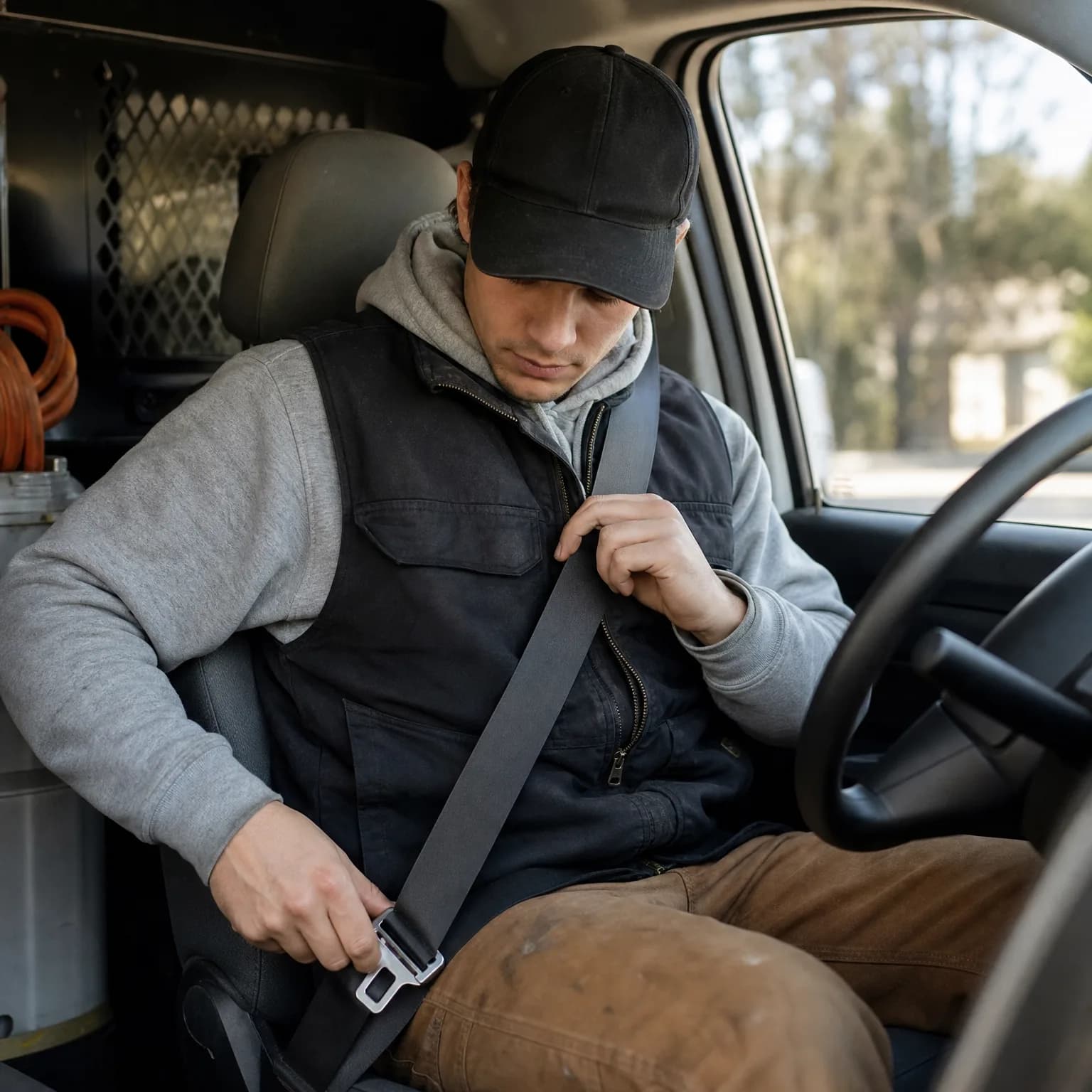





Non-Owner SR-22 Costs $35–$60 Monthly If You Sold Your Car
If you do not own a vehicle but need SR-22 to reinstate your license—common when suspension followed an OWI conviction and you sold your car during the revocation period—non-owner SR-22 policies satisfy WisDOT's filing requirement at $35–$60/month. Non-owner policies provide liability coverage when you drive a borrowed or rented vehicle but do not cover a vehicle titled in your name. The coverage limits match standard policies ($25,000/$50,000/$10,000 minimum), and the SR-22 filing process is identical.
The General, Dairyland, Bristol West, and Progressive quote non-owner SR-22 policies in Wisconsin. USAA writes non-owner SR-22 for military members. The premiums are lower because the carrier assumes you drive infrequently. If you purchase a vehicle mid-policy, you must convert to a standard policy and notify the carrier within 30 days to avoid a lapse-triggered re-suspension. Non-owner policies do not transfer to the new vehicle automatically.
Non-owner SR-22 is not a placeholder product. It is full liability insurance. If you cause an accident while driving a friend's car, the non-owner policy pays the claim up to your policy limits. The policy holder is you—not the vehicle owner. This distinction matters because WisDOT requires proof that you individually carry continuous coverage, regardless of whether you own the vehicle.
3 years
Wisconsin SR-22 Filing Period
Wisconsin requires SR-22 filing for 3 years following OWI-related reinstatements, measured from the date you reinstate—not the date of conviction or suspension. If your policy lapses at any point during those 3 years, the clock resets and you begin a new 3-year period after re-filing.
WisDOT SR-22 requirements

Pay the Full 6-Month Premium Upfront to Avoid Lapse Risk
Most non-standard carriers offer monthly payment plans, but each monthly installment carries a $5–$10 processing fee, and a single missed payment triggers policy cancellation within 10 days. Cancellation triggers SR-22 lapse notification to WisDOT, which re-suspends your license automatically. The lapse consequence is more expensive than the missed payment: you pay another $60 reinstatement fee, file a new SR-22, and restart the 3-year clock.
Paying the full 6-month premium upfront eliminates monthly payment risk. A $90/month policy costs $540 for 6 months. If you cannot pay $540 upfront, set a calendar reminder 5 days before each monthly due date and confirm payment clears your bank account before the grace period expires. Non-standard carriers do not send courtesy reminders. They cancel on day 11 and notify WisDOT electronically the same day.
Compare Quotes Before Your Reinstatement Date
Wisconsin does not require you to purchase insurance before paying the $60 reinstatement fee, but WisDOT will not process your reinstatement until SR-22 filing appears in their system—and carriers take 1–3 business days to transmit the electronic filing after you bind the policy. Start the quote process 2 weeks before your eligibility date. Bind the policy 5 business days before you plan to visit the DMV. Confirm the carrier filed the SR-22 by calling WisDOT's reinstatement unit at (608) 266-2353 before you pay the $60 fee. If the filing has not posted, you will be turned away and lose a day.
Request quotes from The General, Dairyland, Bristol West, GAINSCO, and Progressive. Each quote requires your driver's license number, suspension notice details, and the specific violation that triggered the suspension. Quotes vary 40–60% between carriers for identical coverage. The lowest quote is not always the best long-term option—check the carrier's non-renewal rate in Wisconsin and whether they require broker involvement at renewal. Wisconsin SR-22 filing requirements and carrier options are covered in detail on the state page if you need procedural clarification before requesting quotes.
Non-Standard Carriers Write the Cheapest SR-22 Policies
The General, Bristol West, Dairyland, GAINSCO, and Progressive's non-standard division write Wisconsin SR-22 policies without requiring broker intermediation. These carriers quote $85–$140/month for state minimum liability ($25,000/$50,000/$10,000) with SR-22 filing included. The variance comes from how each carrier weights your violation history—one OWI is priced differently than three points plus driving uninsured. Request quotes from at least three non-standard carriers. The cheapest quote today may not remain cheapest at your 6-month renewal, so shopping every policy period is standard practice in this market.
State Farm and GEICO write SR-22 policies in Wisconsin but classify suspended drivers into higher-rate tiers. State Farm quotes typically land $140–$200/month for the same state minimum coverage non-standard carriers offer at $85–$120. GEICO's quotes cluster $110–$160/month. Both are viable if you already hold a policy with them and want to avoid switching carriers mid-suspension, but new applicants save 30–40% by starting with a non-standard carrier. Allstate, Travelers, and Erie rarely quote suspended drivers in Wisconsin—they refer applicants to their non-standard subsidiaries or decline.
Get Your Free Quote
Get My Wisconsin SR-22 Auto Insurance QuoteFrequently Asked Questions
How much does SR-22 filing cost in Wisconsin?
The SR-22 filing fee is $15–$25, paid once to your insurance carrier when they submit the electronic certificate to WisDOT. The larger cost is the premium increase: SR-22 policies for suspended drivers cost $85–$140/month for state minimum liability, compared to $50–$70/month for clean-record drivers. Non-owner SR-22 policies cost $35–$60/month if you do not own a vehicle.
Can I get my license back without buying insurance in Wisconsin?
No. If your suspension requires SR-22 filing—which applies to OWI, driving uninsured, and chemical test refusal cases—WisDOT will not process your reinstatement until the SR-22 certificate posts in their system. You must purchase a policy that includes SR-22 filing, wait 1–3 business days for the carrier to transmit the filing electronically, then pay the $60 reinstatement fee.
What happens if my SR-22 policy lapses in Wisconsin?
Your carrier notifies WisDOT electronically within 15 days of cancellation or non-renewal. WisDOT re-suspends your license immediately. You pay another $60 reinstatement fee, file a new SR-22, and restart the 3-year filing period from the new reinstatement date. The original time served does not carry over.
Do I need SR-22 if my license was suspended for unpaid tickets in Wisconsin?
Typically no. Unpaid-ticket suspensions and points-only suspensions do not require SR-22 filing unless the underlying violation falls into OWI, uninsured driving, or chemical test refusal categories. Your suspension notice will explicitly reference "proof of financial responsibility" or "FR filing" if SR-22 is required. If the notice does not mention it, you reinstate by paying the $60 fee without SR-22.
Which Wisconsin insurance companies write the cheapest SR-22 policies?
Non-standard carriers—The General, Bristol West, Dairyland, GAINSCO, and Progressive's high-risk division—quote $85–$140/month for state minimum liability with SR-22 filing. These carriers specialize in suspended drivers and price competitively. State Farm and GEICO write SR-22 in Wisconsin but quote $140–$200/month for the same coverage. Request quotes from at least three carriers before binding.
How long does Wisconsin require SR-22 filing after a DUI?
Wisconsin requires SR-22 filing for 3 years following OWI-related reinstatements, measured from the date you reinstate your license—not the conviction date or suspension start date. The 3-year period resets if your policy lapses at any point. Continuous coverage with no lapses is the only way to complete the requirement on schedule.